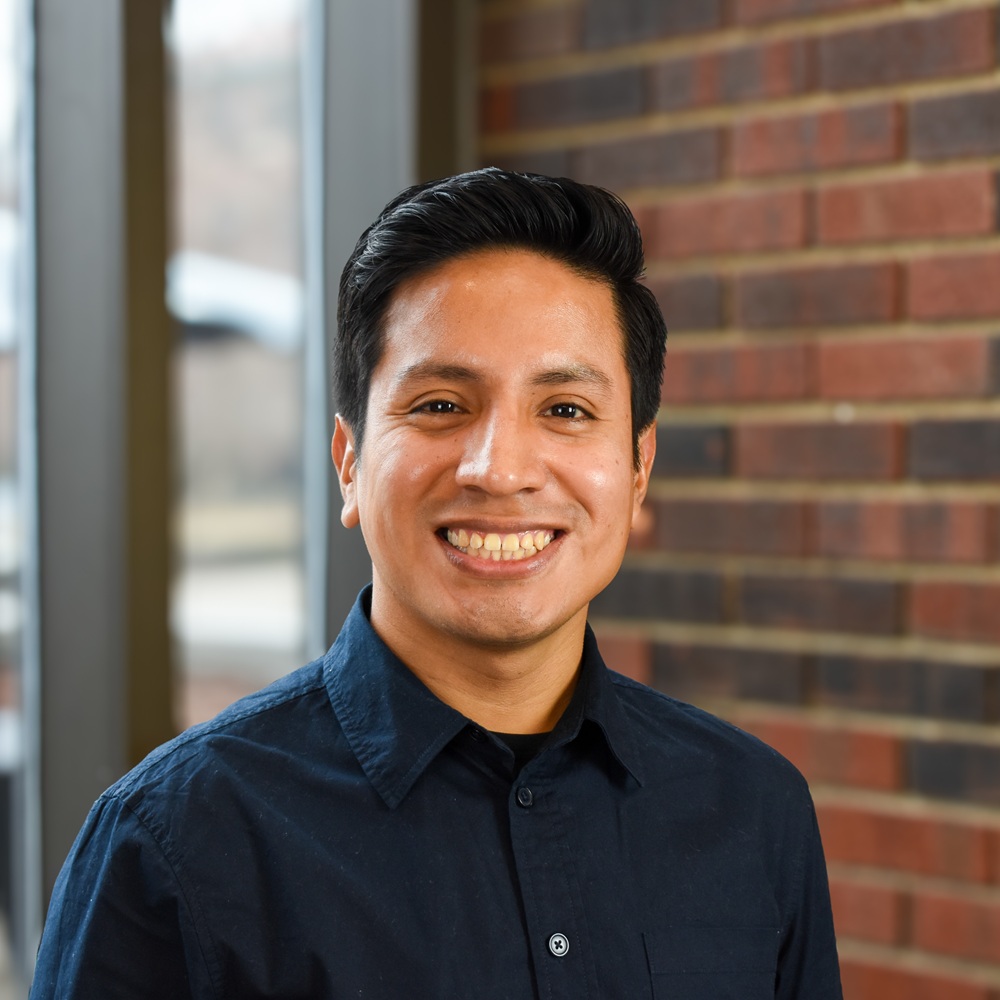
dr. M.P.E. Apolinario
Electronic Instrumentation (EI), Department of Microelectronics Themes: Cognitive sensor nodes and systems
Biography
Marco Apolinario received the B.Sc. degree in Electronics Engineering from the National University of Engineering (UNI), Lima, Peru, in 2017, and the Ph.D. degree in Electrical and Computer Engineering from Purdue University, USA, in 2025, where he was advised by Prof. Kaushik Roy. In 2023, he was a Systems Engineering Intern at Kilby Labs, Texas Instruments, USA. In 2024, he was a Visiting Researcher at Delft University of Technology (TU Delft) through the NSF AccelNet NeuroPAC Fellowship. In February 2026, he joined TU Delft as a Postdoctoral Researcher in the Cognitive Sensors Nodes and Systems (CogSys) Lab.
His research focuses on hardware-algorithm co-design for brain-inspired and energy-efficient artificial intelligence. He works at the intersection of neuromorphic computing, continual learning, and on-device intelligence, developing scalable and hardware-efficient learning algorithms that enable adaptive systems to learn continuously under strict energy and memory constraints. His contributions include biologically inspired local learning rules for deep neural networks, conceptor-based gradient projection methods for continual learning, and low-rank activation compression techniques for efficient continual fine-tuning. He has also contributed to ADC-less in-memory computing architectures for spiking neural networks through joint hardware–software optimization.
Dr. Apolinario's work has been published in venues such as ICCV, WACV, IJCNN, TMLR, IEEE Transactions on Emerging Topics in Computing, and DATE. He is a recipient of the NSF AccelNet NeuroPAC Fellowship and the Peruvian national graduate fellowship Beca Generación del Bicentenario. He serves as a reviewer for leading conferences and journals, including ICML, ICLR, NeurIPS, ICCV, CVPR, ISCAS, and several IEEE Transactions.
He is actively involved in mentorship and outreach initiatives supporting Latin American students in STEM and frequently delivers invited talks on energy-efficient and brain-inspired learning systems.
For a full list of publications, please visit his Google Scholar profile.
Last updated: 12 Feb 2026